
Overview
A vasectomy is a common male sterilization procedure – it is performed on an estimated 500,000 U.S. men a year. It does not affect a man’s ability to perform sexually or achieve orgasms, and doesn’t visibly change semen. But because it is considered irreversible, a vasectomy is a serious step.
Click here to learn more about insurance, out-of-pocket costs, and facts about a vasectomy procedure.
How it Works
A vasectomy is an outpatient procedure that takes about 30 minutes. The patient is usually awake, though receives a local anesthetic.
During a vasectomy, the physician cuts the two tubes (vas deferens) that sperm travel through on their journey from the testes, which make sperm, to the penis. The ends are sutured, clipped and/or sealed by heat (cauterized). Two or three stitches close the incision. In some cases, a no-scalpel technique is used.
The sperm, with nowhere to go, are absorbed by the body.
The prostate and seminal vesicle glands (which produce components of semen) continue to make fluids, so the semen looks the same. Also, hormone levels are unaffected, so hair distribution, voice pitch and sexual drive and sensations are unchanged.
Note, however, that a vasectomy does not prevent sexually transmitted diseases.
Healing
Patients may experience swollen, achy testicles for a week or so after the procedure, as well as bruising in the scrotum. Physicians recommend lying down for six to eight hours after the procedure and placing an ice pack on the incision.
In the five days after surgery, patients should avoid heavy lifting, exercise and sexual intercourse. A small, bloody discharge from the incision site is normal.
Note: It usually takes a few months before sterility is complete, and 15 to 20 ejaculations are required to clear viable sperm from the reproductive system. A physician will confirm sterility with a semen sample two to three months after the vasectomy. Partners should use birth control until a physician determines complete sterility.
Risk Factors
The following complications might occur in the first few days after surgery:
- Hematoma: Though rare, a small blood vessel may leak in the scrotum, forming a clot. A small clot typically dissolves with time, but a larger one may require reopening and draining the scrotum.
- Infection: Signs of infection include fever, chills, redness and swelling around the incision site.
Other complications may occur in the first few months after surgery. Among the most common:
- Sperm granuloma: Sometimes a lump, caused by leaking sperm, can form at the site where the vas deferens is tied off. Usually it causes no problems.
- Congestion: Because sperm are still produced after a vasectomy, they can build up behind the testes and testicle, causing inflammation. It usually disappears without treatment but can require antibiotics and anti-inflammatory medications.
- Recanalization: Though rare, the cut ends of the vas deferens can reconnect, resulting in fertility.
We Offer Sedation
Nitrous oxide (N2O) empowers you to safely control your comfort during in-office procedures, such as a vasectomy. Often referred to as “laughing gas,” N2O will not completely sedate you, but you will be in a state of relaxation.
How it Works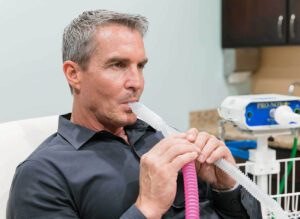
You will inhale while holding your own mouthpiece. Breathing in and out will help relieve anxiety without losing consciousness. As you relax, your doctor performs the vasectomy, a quick, easy, relatively painless procedure that only takes about 15 minutes. Learn more about vasectomy here.
Quick Effect and Recovery
Sedation effects can be felt within just a few breaths. Following your procedure, the effects of this gas wear off shortly after you discontinue the N2O and begin breathing room air again. Unless directed otherwise by your provider, you can drive yourself home.
Cost
N2O is typically not covered by insurance, however we are currently offering it for just $99.
Let us know in advance of your vasectomy or other qualifying procedure if you are interested in using N2O.